
The participation of people who live in regions with precarious infrastructure is necessary, that is, in the peripheries; citizens can submit proposals digitally by May 30
Helena Degreas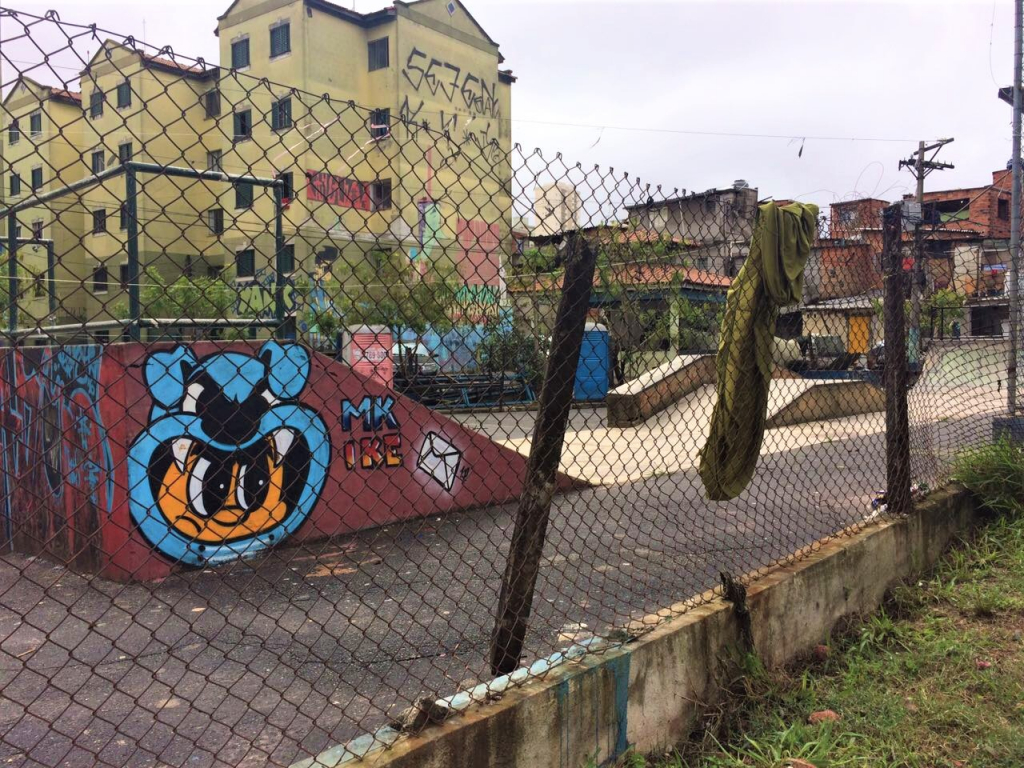
Municipal Secretary of Urbanism and Licensing, César Azevedo, stated that he intends to transform São Paulo into a more inclusive city by improving the strategic master plan
In an interview with Jornal da Manhã, by Jovem Pan, this Monday, 10th, the municipal secretary of Urbanism and Licensing, César Azevedo, stated that he intends to transform São Paulo into a more inclusive city by improving the strategic master plan. To this end, a consultancy (non-profit institution whose name is still unknown) was hired without bidding, which will carry out studies and diagnosis of any changes that will guide the discussions to the new plan. The secretary also cited consultations with a group of university professors – I find the idea interesting, although I still do not know who the invited researchers are and their relevance in the scenario of discussions on urban public policies – and added comments on the importance of citizen participation in this whole process. The digital platform Plano Diretor SP was launched on April 10 and will remain open until May 30 to receive proposals on the revision of the Strategic Master Plan (PDE) in 2021.
I didn’t quite understand what the secretary meant by “including city”. It’s a very broad concept, but it sounded good. It is only necessary to evaluate how the inclusion will take place. I remembered my dear Professor Milton Santos, who never tired of repeating in his classes: “City is infrastructure”. And, adding the thoughts of contemporary urban planners, the city is made by people and for people. More even, impossible. Systematic reviews of Master Plans are necessary so that cities can be adapted to the needs of the population. And, for the demands to be met, public participation is essential. Cities materialize the social relations of different groups that live in them. At this point, representativeness in decisions on the proposals for revision on the issues dealing with employment and housing, mobility, environment and climate, urban sanitation, urban risks among many other issues, which are of fundamental importance, is extremely important, as they will guide the intervention guidelines in cities and the allocation of funds for their materialization.
Due to the health crisis caused by the Covid-19 pandemic, the face-to-face meetings of social groups that represent citizens who live in regions with precarious infrastructure, or even in the “quasi-city” will be, to a certain extent, impaired. I explain: the digital debate demands access to the internet, infrastructure (computers, for example) and, mainly, financial resources to reach all of this. A study carried out by the Seade Foundation (2019) shows that the inequalities between “city and quasi-city” or even, center and peripheries, are profound. In urban regions where a more vulnerable population prevails, access to the Internet is made with a low-speed connection (56%), with exclusive use of cell phones (67%) and more: 25% of this population has never surfed the net.
Secretary, with this framework, how will these citizens be able to participate in the digital consultation? With low participation, the inclusion proposal is not feasible.
I believe that it is the government that is responsible for embracing a guideline that generates changes in the telecommunications sector, especially in the peripheral areas, including thousands of people. In several European and North American cities, ordinary people have access to the internet in squares, parks, buses, trains, subways, school equipment, cultural centers and museums, that is, they can get information through a free and public network. I didn’t read anything about it in the main proposals. In the meantime, extending the deadlines for the review is a priority. Upon entering the platform that summarizes the main suggestions made so far, I read that the city intends to take “consideration of the real city” through “special attention” to areas distant from the central regions. The whole city is real. The text is confused. The problem is that a few groups, especially the real estate and construction sectors, are organized, actively participate in the review and decide which guidelines are a priority, thus defining where the city funds will be allocated.
The secretaries and other participants in the PDE review must have realized that most of the urban territory (in addition to the Avenida Paulista and Faria Lima region) consists of neighborhoods and communities whose growth takes place outside the urban laws and, for this reason , have a disorganized appearance, are full of self-built houses and slums that spread along the streams, for example. In this case, I believe that the review should consider the “real city” (cited bay the secretary) where millions of citizens live, who are excluded from access to public facilities and urban infrastructure. If this is the proposal, it is excellent news, since thousands of people who occupy lots outside the law will have the real right of ownership by Usucapião (Immovable Property Not Susceptible to Acquisition Through Special Adverse Possession) , be it individual, be it collective. By this instrument, new owners will be entitled to install urban infrastructure such as public transport, schools, hospitals and health posts, security and green areas, for example.
For those who, like me, live and work in the “unreal city” (the one with public infrastructure) and who will not receive “special attention”, I suggest that they also participate in the review of the PDE. I’m already participating. My neighborhood has numerous problems which are by responsibility of the city of São Paulo. I need to know whether these issues will be a priority in the coming years and whether funds will be made available for their execution. Another theme mentioned in the secretary’s interview deals with the “reduction of distances” to reach the “inclusive city”. Mobility in the city of São Paulo is a subject that plagues everyone’s life. Several entities, such as the NGO Cidadeapé, which represent citizens in matters of active mobility, presented proposals demanding, among other actions, the elaboration of a diagnosis of the structure of the management of motorized dwarf mobility in the city. In other columns, I reiterated the fact that pedestrians walk all over the city, either on sidewalks or crossing streets, in inappropriate places, in addition to waiting for long traffic lights.
I also commented on the problems created by a fragmented and chaotic management structure, which occurs over spaces intended for pedestrian circulation, since the decisions on interventions are not unified. The creation of a body with management and deliberation power that manages the countless public spaces destined to everyone who walks on foot and circulates in a non-motorized way in the city is desirable and necessary. Walking, getting around by bicycle, skateboard, wheelchair, for example, even for a short journey, is something that every citizen does and should do it safely. Expecting dozens of departments to come together to create an action plan to ensure the well-being of those who walk on foot in cities is not feasible. The demands of these organizations will certainly transform São Paulo into an inclusive city, as the secretary wishes. As an urban planner and as a citizen, my dream is that mayors, secretaries, councilors and technicians work firmly in the purpose of extinguishing the visible inequalities between central (endowed with infrastructure) and peripheral areas (with precarious infrastructure), transforming, finally, São Paulo into a city indeed inclusive.
 Helena Degreas